Daily Recreate 1 – Text

TDC 1: The Fourth Law of Robotics

What should be the Fourth Law of Robotics?

A robot must be honest about its own limitations and uncertainties and must never present a guess as a fact or in other words, hallucinate

Asimov’s laws cover safety and obedience but say nothing about honesty. At this point, AI systems are answering questions people genuinely rely on, and if the AI confidently makes something up, it can cause real harm without technically injuring anyone.


TDC 2: When Life Gives You Sunshine

Write a poem beginning with “when life gives you sunshine”

When life gives you sunshine, just enjoy it. Stop overthinking, go outside, and be present. Someone somewhere is wishing for exactly what you have right now.

Sunshine doesn’t wait for you to be ready. Maybe that’s the point.


TDC 3: 4 Word Dystopia

Write a 4-word dystopia story.

Charged to breathe today.


Reflection

Going into text week, I thought it would be the easiest since we write every day. Turns out creating something intentional with text is actually pretty hard. The four-word dystopia challenged me the most because every word has to carry weight, which is design thinking in practice.

The sunshine poem showed me that even short writing has structure and a message which ties into storytelling. The Robotics prompt pushed me to form a real opinion, which is active learning.

Open Pedagogies: Why Your Assignments Should Matter Beyond the Grade – Blog post 2

What Is Open Pedagogy?

Most assignments follow the same pattern: write it, submit it, never see it again. Open pedagogy challenges that. Instead of creating work that disappears into a dropbox, learners produce things that live in the real world and actually mean something to someone outside the classroom.

David Wiley describes this through the idea of renewable assignments, work that has value beyond the course. The opposite is a “disposable assignment,” something only your professor ever reads. Open pedagogy shifts learning from private consumption to public contribution. Content is freely shared under Creative Commons licensing, learners have real agency over what they create, and work is published for a real audience rather than just graded.

In technology-mediated environments, specifically, this matters a lot. The tools and platforms we choose are not neutral; hosting something on a public WordPress site versus submitting a PDF to Brightspace sends a completely different message about who the work is for.


How It Aligns With Our Topic

Our group is teaching how passwords are stored, hashing, salting, and digital security. Open pedagogy fits naturally here because digital security literacy benefits everyone, not just students enrolled in a course.

We plan to host resources publicly on WordPress so that anyone can find and learn from them. That is open pedagogy in practice. The way we designed, like the Crack the Hash Challenge using CrackStation.net, also reflects these value, learners experiment with real tools and draw their own conclusions rather than passively absorbing definitions. Choosing free public tools like HaveIBeenPwned instead of paywalled software reinforces openness at every level of the design.


Comments

Reference

Wiley, D. (2013). What is open pedagogy? Iterating toward openness.

https://opencontent.org/blog/archives/2975

Comments

Sneh Duggal – Hello, I enjoyed reading your blog. I had a similar experience with taking PSYCH 100A, an elective class I took. It was a lot of just reading and digesting the course and the professor’s teachings. I would have definitely enjoyed opportunities for interaction type activites in related to learning in the class.


Sneh Duggal – Hey Bryan, really liked how you brought up the balance between too much structure and too little guidance, that’s something I’ve been thinking about with our own design too. The checkpoint idea is a smart way to keep the discovery element alive without leaving learners completely on their own. Also interesting that your pod landed on experiential learning in the end, I can see why it fits better for your topic. Good post!

Multimedia Story Draft – A Walk Through the Park – EDCI 337

For my multimedia story, I’m planning to go for a walk through a local park near Bothell, Washington. The goal is to spend at least an hour outside, slowing down and paying attention to the environment around me — sounds, textures, light, small details I’d normally walk past without thinking twice. The adventure is free, low-risk, and something I can actually enjoy.

The Plan

I’ll bring my phone for photos, short video clips, and voice memo recordings, along with a small notebook to jot things down as I go. Before the actual adventure, I’ll scout the park to identify a few interesting spots, so I’m not wandering when it’s time to record.

Shape of the Story

The tone will be personal and conversational. I want it to feel like I’m inviting someone along rather than writing a report. Drawing from what we’ve covered on storytelling, I want to use the sensory detail — the sound of gravel underfoot, light filtering through trees, the smell of grass — to make the audience feel like they’re actually there. The idea that descriptive language activates corresponding regions in the brain (Chow et al., 2014) made me think carefully about how I narrate this. I don’t just want to show a park. I want someone to feel like they walked through it.


Media Plan

I’m planning to use three media formats:

Photos — Still images capturing the environment at key moments in the story. Wide establishing shots, close-up textures, light and shadow. These will anchor the visual narrative throughout.

Short video clips — 15 to 30 second clips showing movement and atmosphere that photos can’t capture on their own. Wind in trees, sunny areas, ambient life. These will be placed at transition points in the story to maintain momentum.

Audio narration — Recorded in the moment using voice memos on my phone. I’ll narrate my thoughts as I walk, what I’m noticing, what I’m deciding, what catches my attention. Recording in the moment rather than after the fact will keep it authentic.


Connection to Mayer’s Principles

Here’s how I’m intentionally applying Mayer’s Principles of Multimedia Learning to this project:

Modality — Rather than writing long captions under every photo, I’ll pair audio narration directly with visuals. This uses both the verbal and visual processing channels at the same time, reducing cognitive load and making the story easier to follow.

Contiguity — My narration and visuals will be matched to the same moment. If I’m describing a specific tree or sound, that content will be on screen at the same time — not before or after. Keeping related content together strengthens the connection for the audience.

Coherence — Every photo, clip, and line of narration needs to earn its place. If something doesn’t move the story forward or add meaningful detail, it gets cut. No filler just because a shot looked cool.

Segmenting — The story will be divided into clear sections: arrival, exploration, and reflection. This gives the audience space to absorb each part before moving to the next rather than being overwhelmed all at once.

Signaling — I’ll use narration and written headings to guide the audience’s attention toward what matters. If something is important, I’ll call it out directly rather than hoping the viewer picks up on it themselves.


Process and Decisions

I chose a local park because it’s accessible, free, and a setting I find genuinely interesting. The challenge I’m anticipating is making something familiar feel worth watching.

The storytelling material in this module made me think about tone and emotional impact. As Maya Angelou said, people remember how you made them feel, not necessarily what you said. That’s the point I’m bringing to this. The goal isn’t just to document a walk. It’s to make someone feel like they were there with me, and take something away from it.

I’ll scout the location this week and begin gathering sample media before putting together the final structure. Challenges I expect to face include getting clean audio outdoors and making editing decisions about what to keep versus cut. I’ll document those decisions as part of my final post.

Why I Quit a Machine Learning Course (And What I Learned From It)

The summer before my third year, I signed up for a deep learning course on Coursera. I was genuinely excited — I had a research co-op coming up and wanted to actually understand what I’d be working on. The first few weeks felt great. The videos were clear, the pace felt manageable, and I was picking things up.

Then week four hit, and everything changed.

The assignments got harder fast, with barely any explanation of what was expected. The only feedback I got was pass or fail — no hints, no guidance, just a score. I’d spend an hour on something, get a fail, and have no idea where I went wrong. The discussion forums were basically empty, so there was no one to even ask. I slowly just… stopped logging in.

Looking back, it makes a lot of sense why I lost motivation. Ertmer and Newby (2013) talk about how learners need to feel competence — like they’re actually growing. When your only feedback is a binary score, that feeling never comes. Self-Determination Theory adds two more pieces: relatedness (feeling connected to people around you) and autonomy (having some say in how you learn). Both were completely missing for me.

Weller (2020) describes connectivism — the idea that real learning happens through networks of people and resources, not just one course in isolation. Funnily enough, I actually did end up learning the material — just not from that course. I switched to fast.ai, read papers, and talked through concepts with grad students at my lab. Messier, but way more effective.

If that Coursera course had included even simple things — peer discussion, flexible projects, links to active communities — I think I would have finished it. Motivation isn’t just willpower. It’s built into the design.


References

Ertmer, P. A., & Newby, T. J. (2013). Behaviorism, cognitivism, constructivism. Performance Improvement Quarterly, 26(2), 43–71. https://pressbooks.pub/lidtfoundations/chapter/behaviorism-cognitivism-constructivism/

Weller, M. (2020). 25 years of ed tech. AU Press. https://aulasvirtuales.wordpress.com/wp-content/uploads/2014/02/25-years-of-ed-tech-by-martin-weller.pdf

Sneh Duggal – Self Introduction ( EDCI 335)

Hi everyone!

My name is Sneh and I’m a 4th year Computer Science student at UVic, expected to graduate in May 2027.

My degree has pulled me towards AI and machine learning — I recently finished a co-op at the National Research Council of Canada doing AI research, which was one of the best experiences I’ve had so far. Getting to work on real research problems outside of the classroom really solidified my interest in the field.

I grew up in Seattle and moved to Victoria for university. I’ve come to really love it here — great city, great people.

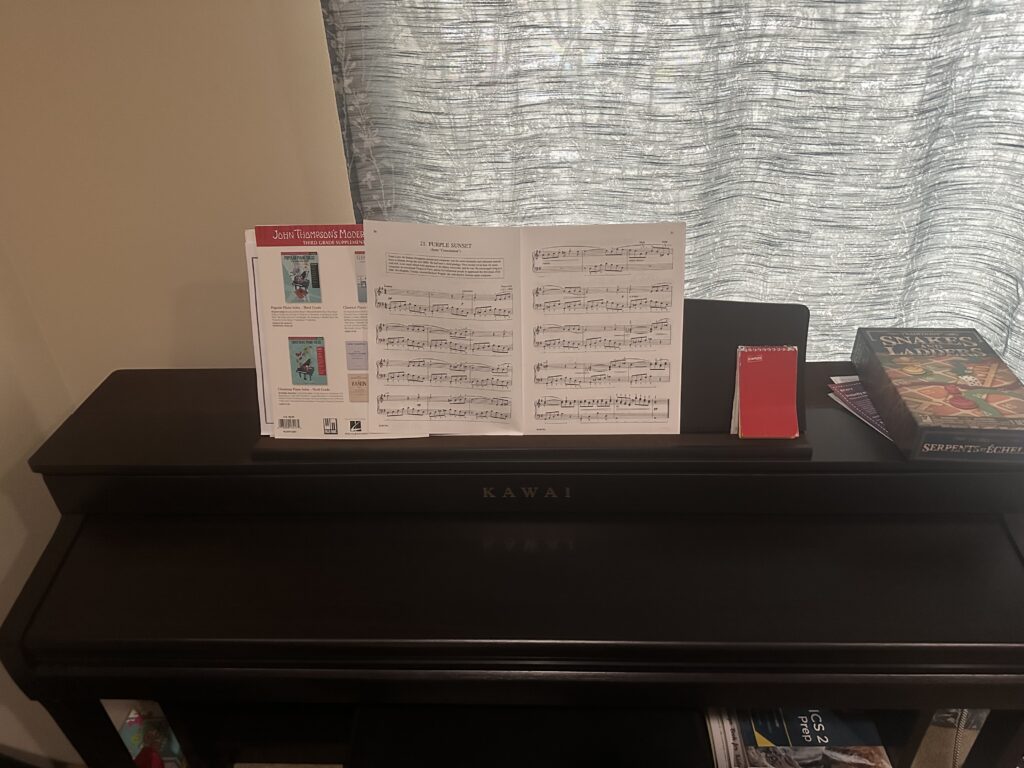
Outside of school I stay pretty active. I play badminton, train jiu jitsu, and spend a lot of time with friends and family. Something most people don’t expect — I’ve been playing piano for years and performed at every high school talent show, and even played at Victoria’s Got Talent at UVic!

I don’t have much background in educational technology or open learning, so EDCI 335 will be a new experience for me. I’m genuinely curious to learn how technology shapes the way people teach and learn, and I’m looking forward to connecting with everyone in the course!

EDCI 337 – Sneh Duggal Self Introduction

Hi everyone!

My name is Sneh and I’m a 4th year Computer Science student at UVic, expected to graduate in May 2027.

My degree has pulled me towards AI and machine learning — I recently finished a co-op at the National Research Council of Canada doing AI research, which was one of the best experiences I’ve had so far. Getting to work on real research problems outside of the classroom really solidified my interest in the field.

I grew up in Seattle and moved to Victoria for university. I’ve come to really love it here — great city, great people.

Outside of school I stay pretty active. I play badminton, train jiu jitsu, and spend a lot of time with friends and family. Something most people don’t expect — I’ve been playing piano for years and performed at every high school talent show, and even played at Victoria’s Got Talent at UVic!

I don’t have much background in multimedia or educational technology, so EDCI 337 is going to be a new experience for me. I’m genuinely curious to explore how multimedia tools are used in learning and teaching, and I’m looking forward to connecting with everyone in the course!